

日本語版: 石場建の健康効果とは|湿気・空気・熱の3点から見る暮らしの変化
“Is a house built with ishibadate good for your health?” It is the question homeowners ask us most often.
The honest answer: the health benefits of ishibadate come from structure, not from medicine. It reduces three common sources of household health stress — moisture, indoor air pollutants and thermal strain. We do not claim that living in one cures illness.
Ishibadate and Health: Moisture, Air and Heat
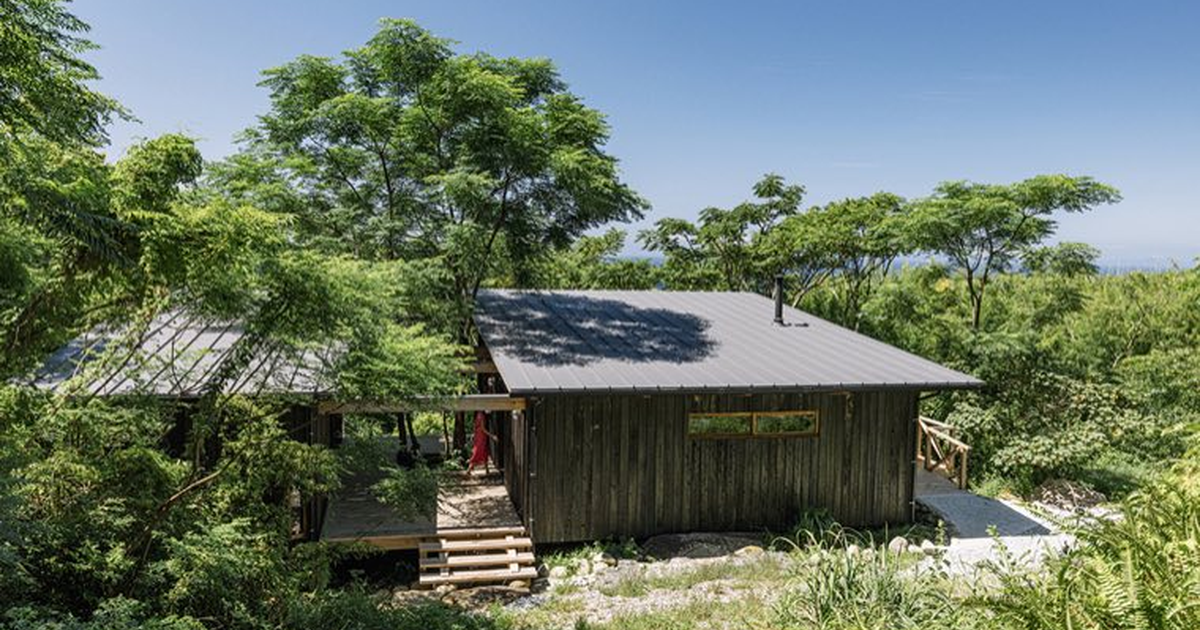
Ishibadate is a traditional Japanese construction method in which timber columns stand directly on foundation stones, held by gravity rather than fixed to a concrete slab. Temples built this way have survived for over a thousand years.
For health, the key point is that the floor sits above the ground and air passes freely beneath it. That is very different from a house sealed on a concrete mat foundation.
Moisture, Mold and Dust Mites: Why an Open Crawl Space Helps
Air moves under the house
Because stones are placed only at points, the underfloor space can be open on all sides. Moisture rising from the ground is carried away by wind instead of building up under the floor.
Trapped underfloor moisture damages timber, encourages mold, and releases spores into living spaces. Ishibadate interrupts this chain at its first link.
Humidity benchmarks
As a general guide, mold and dust mites multiply when indoor relative humidity stays above about 60%. A comfortable, hygienic range is roughly 40–60%. Structure cannot control humidity alone, but a house that does not accumulate underfloor moisture starts from a better position.
The condition people overlook: site drainage
An open crawl space does not help much if the ground itself stays waterlogged. Ishibadate moisture control works only together with a well-drained, breathing site — which is why we compact crushed stone under each foundation stone to secure drainage and airflow.
Indoor Air Quality: Fewer Chemical Sources
Japan made sick-house countermeasures mandatory in the Building Standards Act in 2003, and the Ministry of Health sets an indoor guideline of 0.08 ppm for formaldehyde. New homes are therefore regulated to a baseline.
Ishibadate goes further because its frame relies on joinery in solid timber rather than adhesive-bonded panels, and finishes such as earthen plaster, lime plaster and solid boards need little chemical support.
One caution: “natural material” is not automatically safe. Paints, preservatives and termite treatments change indoor air as much as the timber does, so specify those carefully too.
Heat: Cool Summers, and an Honest Look at Winter
In summer, underfloor airflow and the humidity-buffering of earthen walls and solid wood soften the muggy feeling. In winter, however, an open underfloor can make feet cold, and large temperature gaps between rooms raise heat-shock risk.
- Insulate the floor beneath the floorboards, even with an open crawl space
- Upgrade windows and orient them to capture winter sun
- Keep bathrooms and toilets close to living areas to reduce temperature gaps
Ishibadate is not automatically a cold house — but it will be one if insulation is ignored. The health benefit depends on design quality.
Think of the Whole Site: Is the Soil Beneath Your House Breathing?
As an environmental regeneration landscape and civil-engineering company, EKAM treats a house as part of the site’s water and air flow. Puddles that linger, soft ground and struggling trees are signs that this flow has stalled — and a stalled site makes any underfloor harder to keep dry.
Three Checks Before Choosing Ishibadate for Your Health
- Building code compliance: ishibadate generally requires special structural calculations. Confirm the designer and builder can handle them.
- Insulation and heating plan: ask how winter cold will be addressed on the drawings.
- Site drainage: have the ground and water flow read before you build.
If you read Japanese, our official LINE account offers a free site-diagnosis checklist and an ishibadate building-code guide: EKAM official LINE. You can also reach us through the contact page.
Frequently Asked Questions
Q. Will living in an ishibadate house make me healthier?
No medical effect is guaranteed. Ishibadate reduces moisture build-up under the floor and relies less on adhesive-bonded materials, which lowers common household health stressors. Results depend on finishes, insulation design and site drainage.
Q. Is an ishibadate house cold in winter?
It can be if insulation is ignored, because the underfloor is open. Floor insulation, high-performance windows and sensible placement of bathrooms largely compensate.
Q. Is ishibadate less prone to mold?
Wind passing under the floor keeps underfloor moisture low, but only if the site itself drains well. Building and ground drainage must be addressed together.
Summary
- The health benefits of ishibadate come from moisture, air and heat; no medical effect is claimed.
- Moisture: an open underfloor lets wind remove ground moisture.
- Air: natural-material construction reduces reliance on adhesives and panels, but finishes still matter.
- Heat: cool in summer; cold feet in winter unless floor insulation and windows are designed well.
- Site: effects fade on poorly drained land, so diagnose the site first.