

Our thoughts remain with everyone affected by the recent earthquake in Kumamoto, Japan. Please put your safety first while aftershocks continue.
Liquefaction is a word we hear in every major earthquake report, yet few people know what it actually does to a residential lot, or which signs to look for. This article explains the mechanism, the signs that appear in yards and gardens, and a connection that often goes unnoticed: the relationship between everyday drainage and liquefaction risk.
Why Liquefaction Happens
In healthy ground, sand and soil particles interlock to form a skeleton, with water filling the gaps. Under prolonged strong shaking, that interlocking fails: particles float in the water, the ground loses its bearing capacity, and it behaves like a liquid. When the shaking stops, particles settle and repack — ejecting water and sand to the surface (sand boils) and causing the ground to subside.
Liquefaction is most likely where three conditions overlap: loose sandy ground, a high water table, and artificial fill. Reclaimed land, former river channels, and valley-fill housing lots deserve particular attention. A buried valley collects water by nature; sandy fill above it can liquefy, while clay fill can flow like a debris slide. Damage also concentrates at the boundary between cut ground and fill.
Signs on Your Property
- Sand boils: muddy water erupting from cracks, leaving small volcano-like mounds of sand when dry
- Floating manholes and drainage boxes: light underground structures rise when surrounding ground loses strength
- Uneven settlement: buildings or walls tilting in one direction
- Rippled or stepped ground where it used to be flat
- Cloudy well water: evidence that sand and groundwater were churned together below
Record these signs with dated photographs from a safe distance — sand boils wash away in the next rain. Signs can also appear after aftershocks, so re-photograph the same spots regularly.
Watch the Places That Were Once Excavated
Liquefaction is often local rather than neighborhood-wide. Spots excavated and backfilled in the past — around septic tanks, manholes, rain gutters, along buried pipes, and behind retaining walls — are looser than the surrounding ground and collect water. These are the places that sink or float first, earthquake after earthquake. If a corner of your lot always puddles or feels soft underfoot, pay attention to it after any strong shaking.
The Drainage Connection
Geology cannot be changed, but water stagnation can. Conventional structural design considers soil mainly as something to be compressed, and rarely accounts for how water moves through it. Where water stagnates behind retaining walls or around foundations, that trapped water feeds localized liquefaction and lateral pressure during an earthquake.
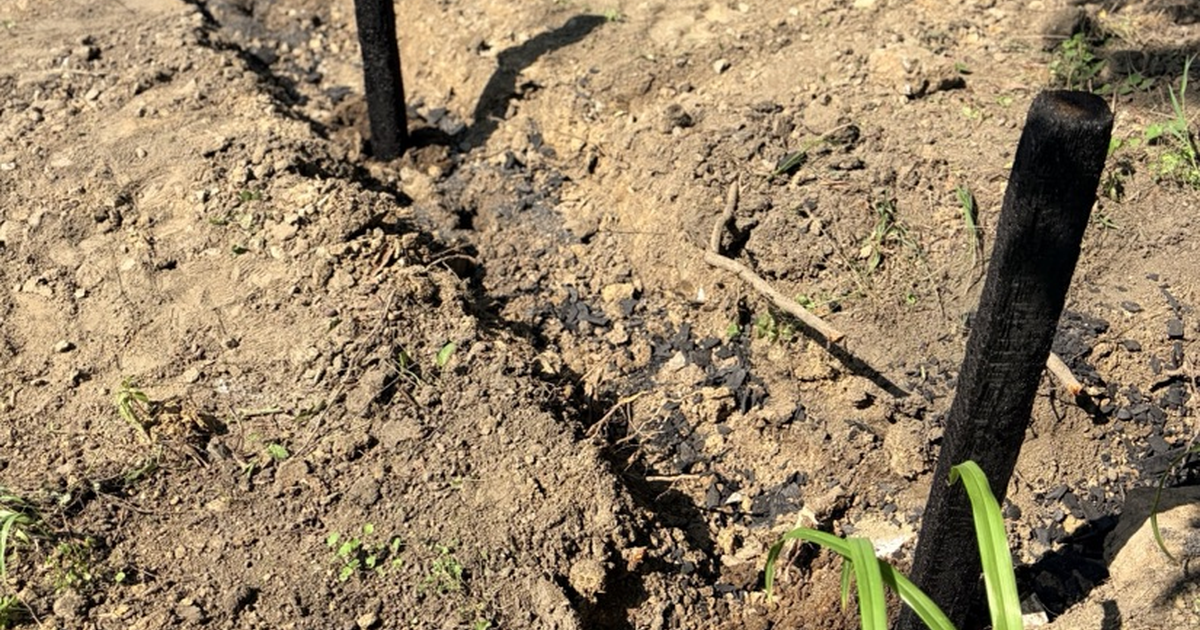
One field measurement is worth knowing. On a clay site with poor infiltration, a structure of wooden piles, stones and straw was installed to create pathways for water and air. A 20 cm puddle that took three hours to drain right after construction drained in tens of seconds to a few minutes one year later — the function had grown as roots and fungal networks developed. Excavations of 800-year-old castle earthworks built on the same principle show them intact, without liquefaction. Keeping water moving through the soil is not only about comfort; it shapes how the ground behaves in an earthquake.
What You Can Do Before the Next Earthquake
Many municipalities publish liquefaction hazard maps, and landform classification maps reveal whether your lot was once a river, paddy or valley. Improve drainage so rainwater does not stagnate on the lot, and take seasonal photos of your yard as a baseline for future comparison. If liquefaction damage is suspected, request your municipality’s post-disaster risk assessment and consult professionals with your ground investigation report in hand.
Summary
- Liquefaction occurs when shaking breaks the interlocking of water-saturated sandy soil
- Reclaimed land, former channels and valley fill are high-risk; boundaries between cut and fill concentrate damage
- Sand boils, floating manholes, tilting and cloudy wells are key signs — photograph them early
- Previously excavated, backfilled spots liquefy first; know where they are on your lot
- Good drainage and soil that breathes are quiet but real earthquake preparedness
We hope calm days return soon to everyone in the affected areas.