

Once again, our sympathies go to everyone affected by the Kumamoto earthquake, and our respect to the crews working on emergency road clearing and slope stabilization right now.
What people in earthworks fear most after a major earthquake is not the next tremor — it is the next rain. Slopes that withstood the shaking fail weeks or months later under rainfall; this time-lagged disaster has repeated after past earthquakes, and summer stacks the rainy and typhoon season directly on top of the aftershock period. This article explains what is happening inside a shaken slope, how slope failure typically progresses, what to watch before and during rain, and one principle everyone should know: never block water’s exit.
The most important line first: base evacuation decisions on official municipal information and hazard maps, not on your own observations. The absence of warning signs is never proof of safety.
A Shaken Slope Is Not the Same Slope
Strong shaking changes a slope internally even when the surface looks untouched: the interlocking of soil particles loosens, fine tension cracks open along the upper shoulder of the slope — usually hidden under grass and litter — and new water paths form inside. When rain follows, water that would normally run off or soak in slowly pours directly into the slope through those cracks. The soil grows heavier while friction between particles drops: more load, less grip, at the same time. That is why rainfall amounts that never mattered before can trigger failure after an earthquake.
How Slope Failure Progresses
- The shoulder fails first: the upper edge where flat ground meets the slope collapses near-vertically. In residential areas, houses and roads often press right up to this shoulder, feeding roof runoff and household drainage into the slope
- Debris piles at the toe at a loose angle of repose
- The loose debris traps water, turning stagnant and sludge-like
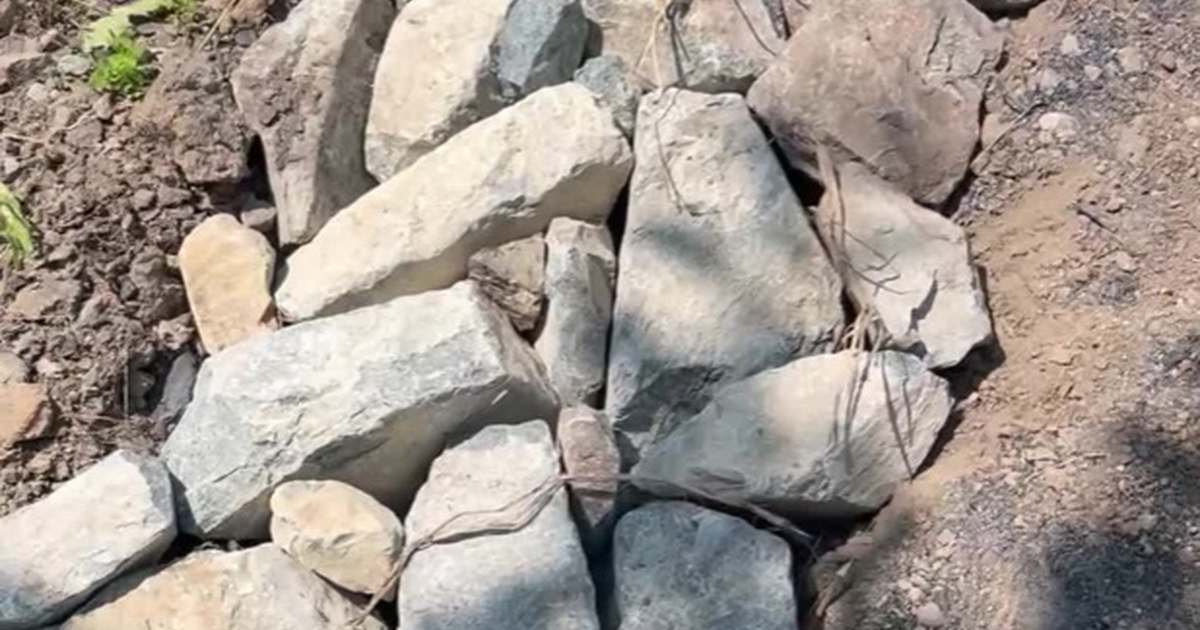
- Springs lose their exit: groundwater that used to seep out at the base is sealed in by the debris, raising water pressure inside the slope
- Failure spreads sideways and upward as trapped water finds the next weak point
Notice that the protagonist of every step is water. Clearing fallen soil alone does not stop the chain; restoring water’s exit does.
What to Watch Before and During Rain
Before a forecast rain, from a safe distance: new steps or cracks along the slope shoulder, tilting poles or trees, new seepage or permanently wet bands mid-slope, fresh debris at the toe, and blocked ditches. Classic landslide warning signs include pebbles trickling down, new springs appearing — or familiar springs suddenly stopping — streams turning muddy or abruptly shrinking, rumbling from the ground, and a rotten-soil smell. If you notice any of these, do not go closer to confirm; leave and evacuate.
Use official tools as well: real-time landslide risk maps reflect accumulated rainfall in the soil, not just current rain. But remember their thresholds assume normal ground — a post-earthquake slope can fail before warnings trigger. Past earthquakes have seen slope disasters months after the shaking. During this period, act one step earlier than the information tells you.
Never Block Water’s Exit
Seeing a spring seep from a damaged slope, the instinct is to plug it. Resist that instinct. A spring is groundwater’s legitimate exit; seal it with soil or concrete and the water does not disappear — it accumulates inside the slope as pressure, preparing the next failure. The same logic applies to weep holes in retaining walls. Traditional earthworks were consistent on this point: water on a slope is guided, never stopped — secure the exits, distribute the flow, keep water and air moving through the soil.
Sensible emergency measures around your own property include sheeting cracked areas so rain cannot enter (anchor the sheet edges with sandbags and direct its runoff away from the slope), using sandbags to redirect rather than dam flowing water, and clearing leaves from ditches within safe reach. Treat these as stopgaps — when heavy rain is forecast, evacuation outranks any of them.
Summary
- Shaking leaves slopes with hidden cracks that channel rain straight inside: heavier soil, weaker grip
- Failure typically starts at the shoulder and spreads as debris traps water and springs lose their exits
- Know the warning signs — falling pebbles, changed springs, muddy streams, ground rumbling — but evacuate on official information, not on their absence
- Never plug springs or weep holes; guide water instead of stopping it
- In the post-earthquake period, act one step earlier than the warnings
To everyone watching the rain forecast with unease: please choose early evacuation without hesitation. We hope only gentle rain falls on the slopes of the affected region.