

日本語版: 電気を使わない排水浄化システムを自作|炭と石と微生物で排水を土に還す仕組み
Once wastewater leaves the sink, it disappears from our minds. Yet somewhere downstream, a blower runs 24 hours a day to push air into a treatment tank, and the treated water is piped off to a river or the sea. Many people who care about land and water feel uneasy about that invisible chain.
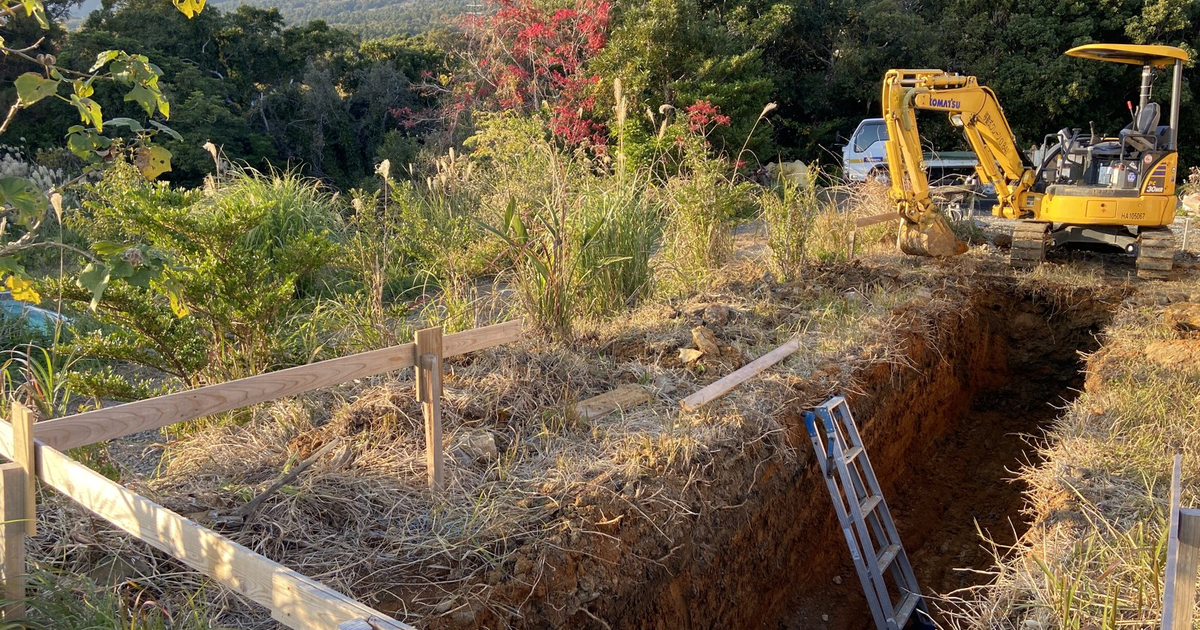
At EKAM, we built our own electricity-free wastewater treatment system on our company land in Japan. Our starting point was the thinking behind the Ecolon System, a Japanese soil-based system that uses microbes to break down household wastewater and return it to the ground. We combined that idea with the way we already use charcoal, stone and organic matter in regenerative landscaping, and assembled everything from locally available materials.
This is part one of a two-part series. Here we explain why the system works without electricity and what we considered in the design. The step-by-step build is covered in part two, and whether the same approach can support a guesthouse or restaurant is discussed in a separate article.
Why We Built Our Own Wastewater Treatment System
From “treat and discharge” to “return to the soil”
A standard Japanese household septic tank (a combined treatment tank) uses a blower to aerate the tank so that microbes can digest organic matter, then discharges the treated water into a ditch or stream. It is reliable and fully recognized by law. But the blower never stops. According to Ecolon’s published information, roughly 15% of the annual electricity use of a typical household with such a tank goes to wastewater treatment.
Electricity was not our only concern. Piping treated water far away cuts the water cycle of a site with a single pipe. What we see again and again in regenerative civil works is simple: where water and air move slowly through the soil, plants and soil thrive. We wanted to treat wastewater not as waste to get rid of, but as water to return to the land over time.
Why build rather than buy
- To test whether familiar landscaping materials such as charcoal, stone, jute and leaf litter could do the same job
- To learn what matters on an island with heavy rainfall and clay-rich ground that drains slowly
- To observe how plants and soil around the system change over the years
How Electricity-Free Wastewater Treatment Works
Wastewater can be cleaned without power because the work is handed from one group of microbes to another, each suited to a different environment. Inside the system there are three stages.
1. The anaerobic zone: settle and digest
In the first chamber, heavy solids sink. Oxygen is scarce here, and anaerobic microbes slowly liquefy and break down organic matter, much like digestion. When inflow and digestion stay in balance, solids do not keep accumulating.
2. The aerobic zone: decomposition on stone surfaces
As new wastewater enters, the clearer upper layer is pushed into the gaps between stones and gravel. A thin biofilm forms on the stone surfaces, and where air reaches it, aerobic microbes decompose the remaining organic matter. More voids mean more surface area and better airflow.
3. The soil zone: slow spreading by capillary action
Finally, water moves into the surrounding soil through capillary action, the force that draws water through fine pores. Soil microbes and plant roots take up nutrients such as nitrogen and phosphorus. Some water returns to the air through plants, and some slowly moves deeper underground.
| Stage | Main workers | Conditions | What happens |
|---|---|---|---|
| Anaerobic zone | Anaerobic microbes | Low oxygen | Settling and liquefying solids |
| Aerobic zone | Aerobic microbes (biofilm) | Air in stone voids | Breaking down organic matter |
| Soil zone | Soil microbes and roots | Aerated, moist soil | Nutrient uptake and water cycling |
No machine is needed because gravity moves water from tank to soil and air pathways are built into the structure from the start.
Five Design Choices in Our Self-Built System
Ecolon’s published guideline assumes 200 liters of wastewater per person per day, a width of 1.3 to 1.4 meters, and 2 meters of length per person, so a family of four needs about 8 meters. We designed for a household of four using this as a baseline, and added five choices of our own.
A “breathing wall” of charcoal
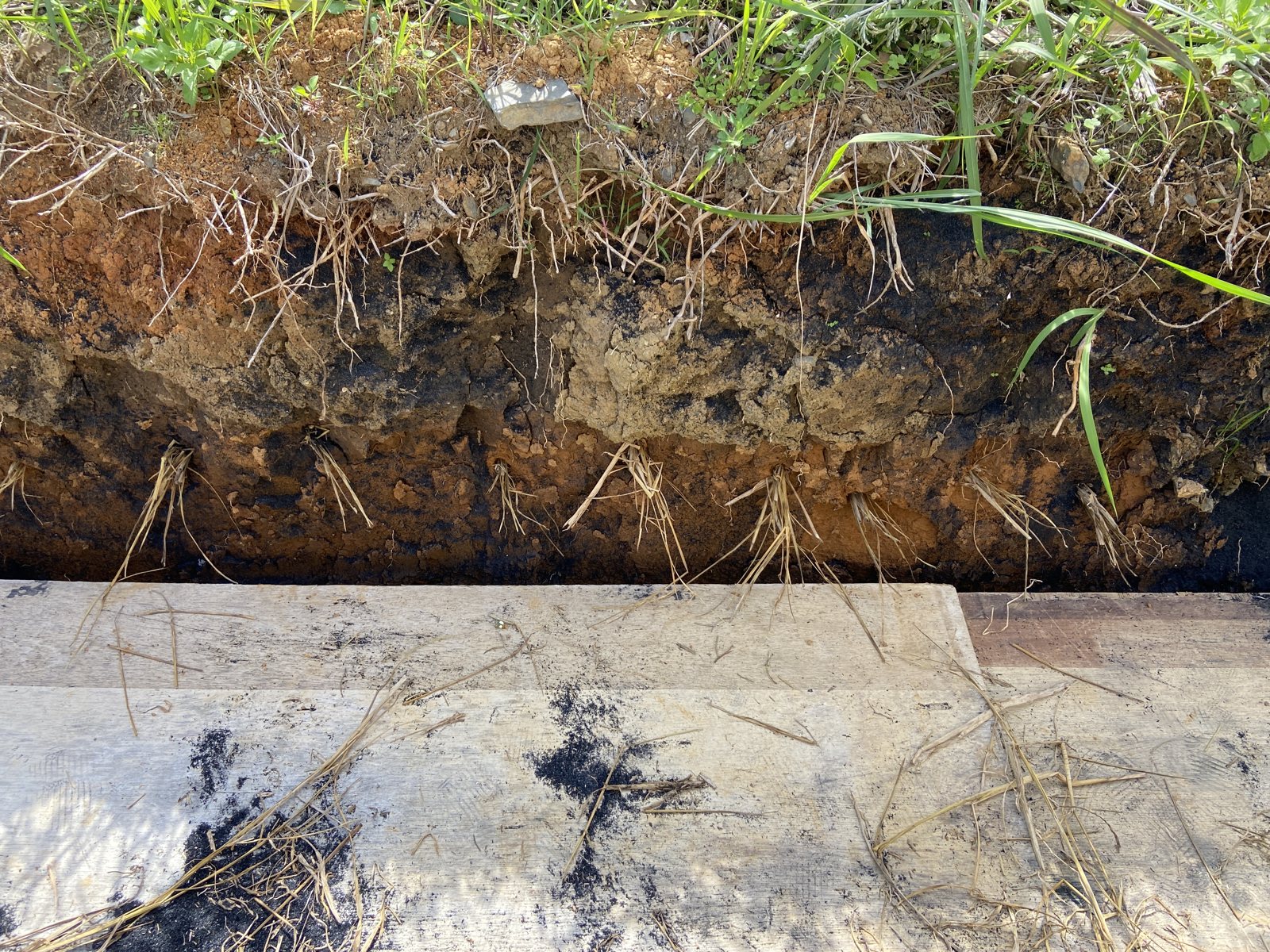
Instead of backfilling with excavated soil, we packed charcoal around the chamber and tamped it firmly. Charcoal is full of tiny pores: it keeps air pathways open, houses microbes and adsorbs odor compounds. In the trench wall, the black charcoal layer stands out clearly against the red native soil.
Round stones and split stones for a void-rich layer
We lined the chamber with rounded river stones and covered them with split stones. Large gaps between round stones let both water and air pass. Rather than treating water inside a concrete box, the stone surfaces themselves become microbial habitat.
Materials that eventually return to the soil
Pipes were wrapped in jute, and the top was covered with coir (coconut fiber) and jute cloth. These keep sand and soil from clogging the voids, then decompose over several years and become part of the soil.
Vertical pipes for air and inspection
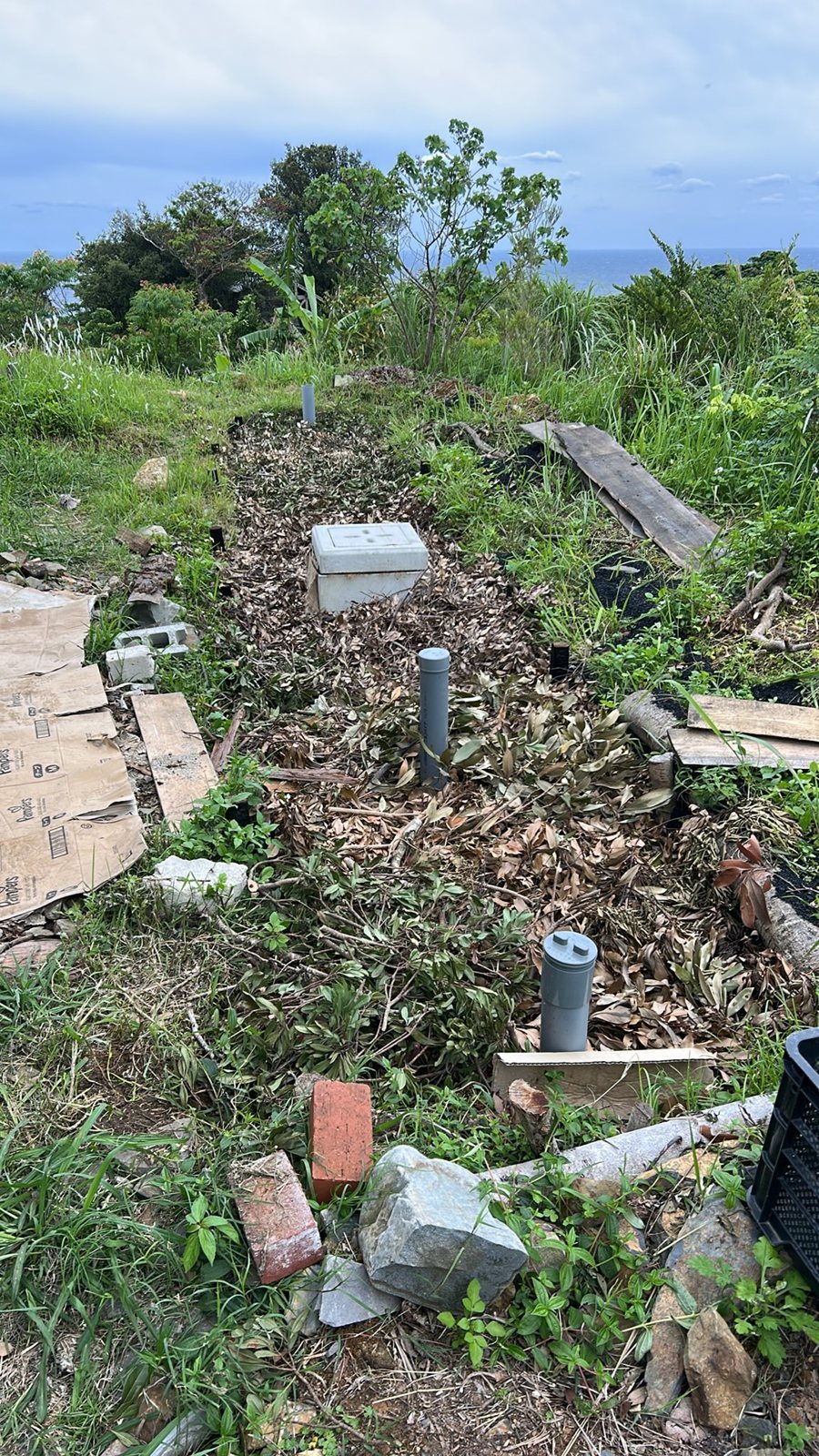
Several PVC pipes stand above ground. They release gas, let air in, and double as inspection ports for checking water levels. A system that works out of sight needs windows into what is happening below.
A surface of leaf litter and wood chips
Finally, we covered the surface thickly with leaves and wood chips. The mulch prevents heavy rain from sealing the surface, buffers drying, and shelters the microbes and small creatures of the topsoil.
What We Learned and What to Watch For
Check how water soaks in first
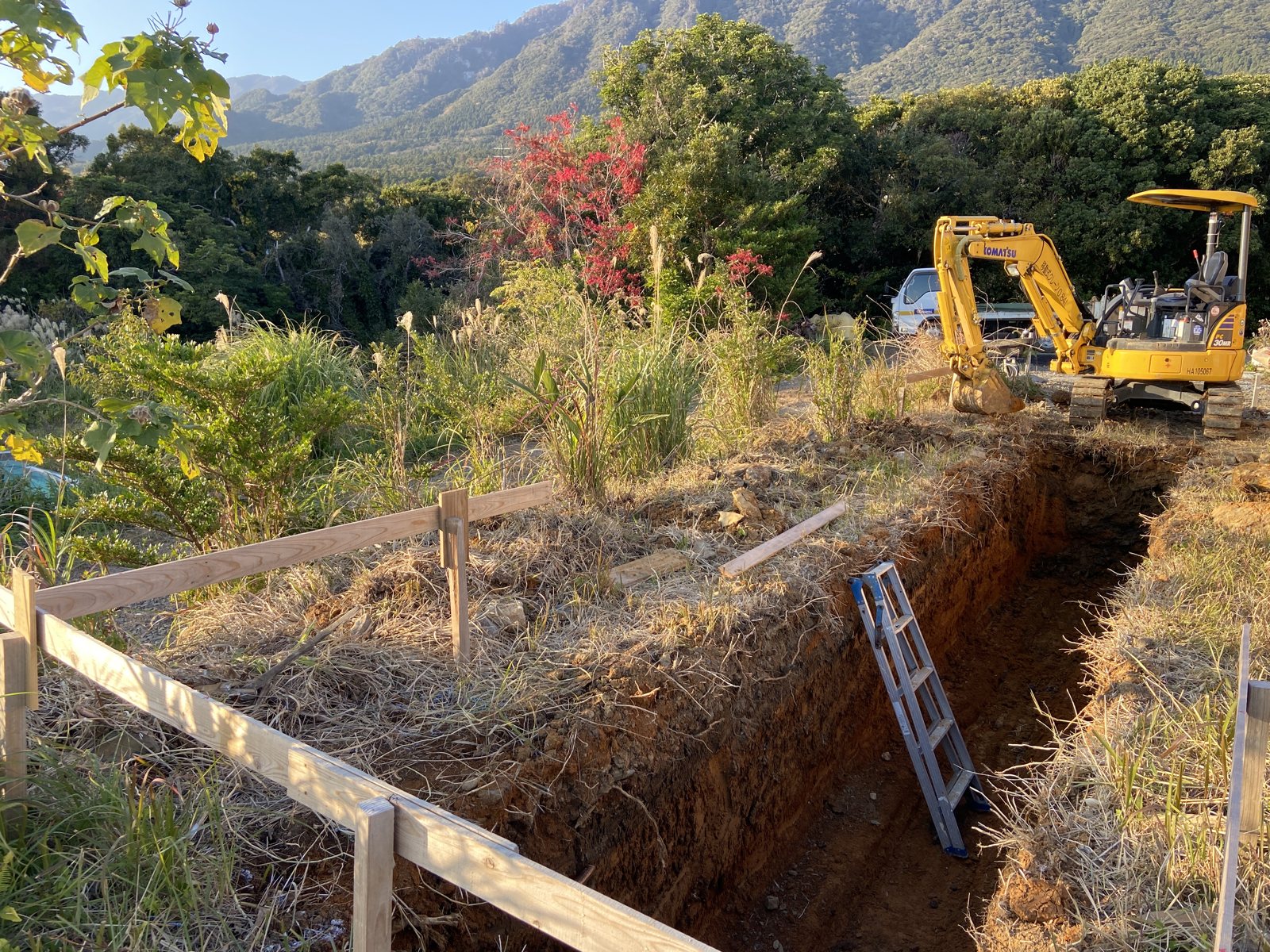
During construction, water pooled in the open trench and was slow to drain. Clay-rich ground accepts water much more slowly than you might expect, and a system that returns water to soil depends on how much water the ground can accept. Dig a test hole, fill it with water and watch how fast it drains before you design.
Agree as a household on what must not go down the drain
Microbes do the work. Drain cleaners, strong chlorine bleach, large amounts of oil and non-biodegradable plastics can stop them or cause clogs. Using less detergent and wiping oily dishes before washing are part of the system.
Measure water quality with numbers
No odor and no surface overflow are important signs, but they do not tell you how well the water is treated. We plan to sample water from the inspection ports, measure indicators such as BOD (biochemical oxygen demand), and record seasonal changes. We will share the data once we have it.
Regulations in Japan, and Advice for Anyone Considering This
This point matters. In Japan, any facility that treats toilet waste and discharges it anywhere other than a public sewer must be a legally recognized septic tank under the Johkasou Act (Article 3-2). Soil-based systems like the one described here are not recognized as such tanks.
How local authorities handle this varies, and building permits, local wastewater ordinances and groundwater protection rules differ from place to place. Examples found online may not apply to your land. Outside Japan, rules differ again, so always start with your local health and environmental authorities.
- Consult the municipal septic tank or environment office, the public health center and the building department before installing anything
- Check distances to wells, water sources, streams and the sea so groundwater is not polluted
- Look for a form your area accepts, such as treating greywater only, or using a soil stage after a licensed septic tank
This article documents our construction and explains the principles. It is not a recommendation to install the same system.
Frequently Asked Questions
Q. How does an electricity-free wastewater treatment system clean water?
It passes the work between different microbes. Solids settle in a low-oxygen chamber where anaerobic microbes digest them, clarified water then moves through stone voids where aerobic microbes break down remaining organic matter, and finally capillary action spreads the water into soil where microbes and plant roots take up nutrients.
Q. Why use charcoal around a wastewater treatment system?
Charcoal is highly porous, so even when tamped it keeps air pathways open, provides habitat for microbes and adsorbs odor compounds. Backfilling around the chamber with charcoal creates a wall that is firm yet able to breathe.
Q. How large does a system need to be for a family of four?
The Ecolon System’s published guideline assumes 200 liters per person per day, a width of 1.3 to 1.4 meters and 2 meters of length per person, so about 8 meters for four people. Soil permeability changes what is needed, so test how water drains on your site first.
Q. Can toilet wastewater be treated with a soil-based system in Japan?
Japan’s Johkasou Act requires that facilities treating toilet waste and discharging outside public sewers be recognized septic tanks, and soil-based systems are not recognized as such. Handling varies by municipality, so consult local authorities before installing anything.
Conclusion
- An electricity-free wastewater treatment system works by passing the job from anaerobic microbes to aerobic microbes to soil life
- Our build used charcoal as a breathing wall, round and split stones for voids, and jute and coir to prevent clogging
- Success depends on soil permeability, air pathways and a household that keeps harmful substances out of the drain
- Systems handling toilet waste fall under Japan’s Johkasou Act, so consult local authorities before installing
In part two, we walk through the build from excavation to charcoal, stone layers and mulch, using 16 months of site photos.