

日本語版: 自然な排水浄化で宿泊施設・飲食店はできる?法律と3つの現実解
Many people dream of opening a small nature-based guesthouse, or a café serving vegetables from their own garden. And we at EKAM often hear the same question from them: “Can I run a lodging or restaurant business with electricity-free, soil-based wastewater treatment?”
We built our own soil-based wastewater treatment system using microbes, charcoal and stone. Based on that experience and a review of Japanese regulations, here is our answer:
In Japan, it is generally not possible to obtain lodging or restaurant permits while treating toilet wastewater with a soil-based system alone. But by combining a licensed septic tank with a finishing stage of soil and plants, you can absolutely create a guesthouse or café that works in harmony with nature.
This article explains the legal framework, how business wastewater differs from household wastewater, and practical designs for nature-minded business owners. The regulations described are Japanese; if you are elsewhere, the principles still apply, but check your local rules.
Household and Business Wastewater Are Very Different
Volume and strength change
Septic tanks in Japan are sized by “person equivalents.” Homes typically use 5- or 7-person tanks, while business buildings are calculated by use under the Japanese Industrial Standard JIS A 3302.
| Use | Formula (A = total floor area in m²) | For 100 m² |
|---|---|---|
| Hotel or inn (no banquet hall) | n = 0.075A | about 8 |
| Hotel or inn (with banquet hall) | n = 0.15A | 15 |
| Restaurant (general) | n = 0.72A | 72 |
| Restaurant (high organic load) | n = 2.94A | 294 |
For the same 100 m², a restaurant is sized at nearly ten times an inn without a banquet hall, because kitchen wastewater carries oil and food waste and is far more concentrated. A natural system scaled for a household cannot simply be enlarged for a restaurant.
Peaks you cannot switch off
Guesthouses swing between full weekends and quiet seasons; restaurants between lunch rush and prep hours. Microbes dislike sudden changes, and a business cannot stop its wastewater while guests are present. You must design for your busiest day.
Laws That Apply to Lodging and Restaurant Wastewater in Japan
The Johkasou Act and the Building Standards Act
Facilities that treat toilet waste and discharge anywhere other than a public sewer must be septic tanks recognized under the Johkasou Act (Article 3-2). Greywater from septic tank users must also be treated before discharge. Under the Building Standards Act, flush toilets outside sewer areas require a compliant septic tank, which is checked during building permits and changes of use.
The Inns and Hotels Act and the Food Sanitation Act
Lodging businesses need a permit under the Inns and Hotels Act, and restaurants need a business permit under the Food Sanitation Act; both are handled by public health centers. Inspections look at toilets, kitchens and whether wastewater is properly treated. A plan that relies on a facility not recognized under the Johkasou Act is unlikely to pass.
The Water Pollution Prevention Act and local ordinances
Kitchen, laundry and bathing facilities in lodging businesses, and kitchens in larger restaurants, are “specified facilities” under the Water Pollution Prevention Act. Larger discharges are subject to effluent standards, and prefectures may add stricter rules. Water source protection areas and natural parks can carry further restrictions.
In short, a licensed septic tank sits at the core of business wastewater treatment. So can a nature-based design still be achieved? Yes.
Three Practical Approaches for Nature-Minded Lodgings and Cafés
Approach 1. A septic tank plus a “finishing stage” of soil and plants
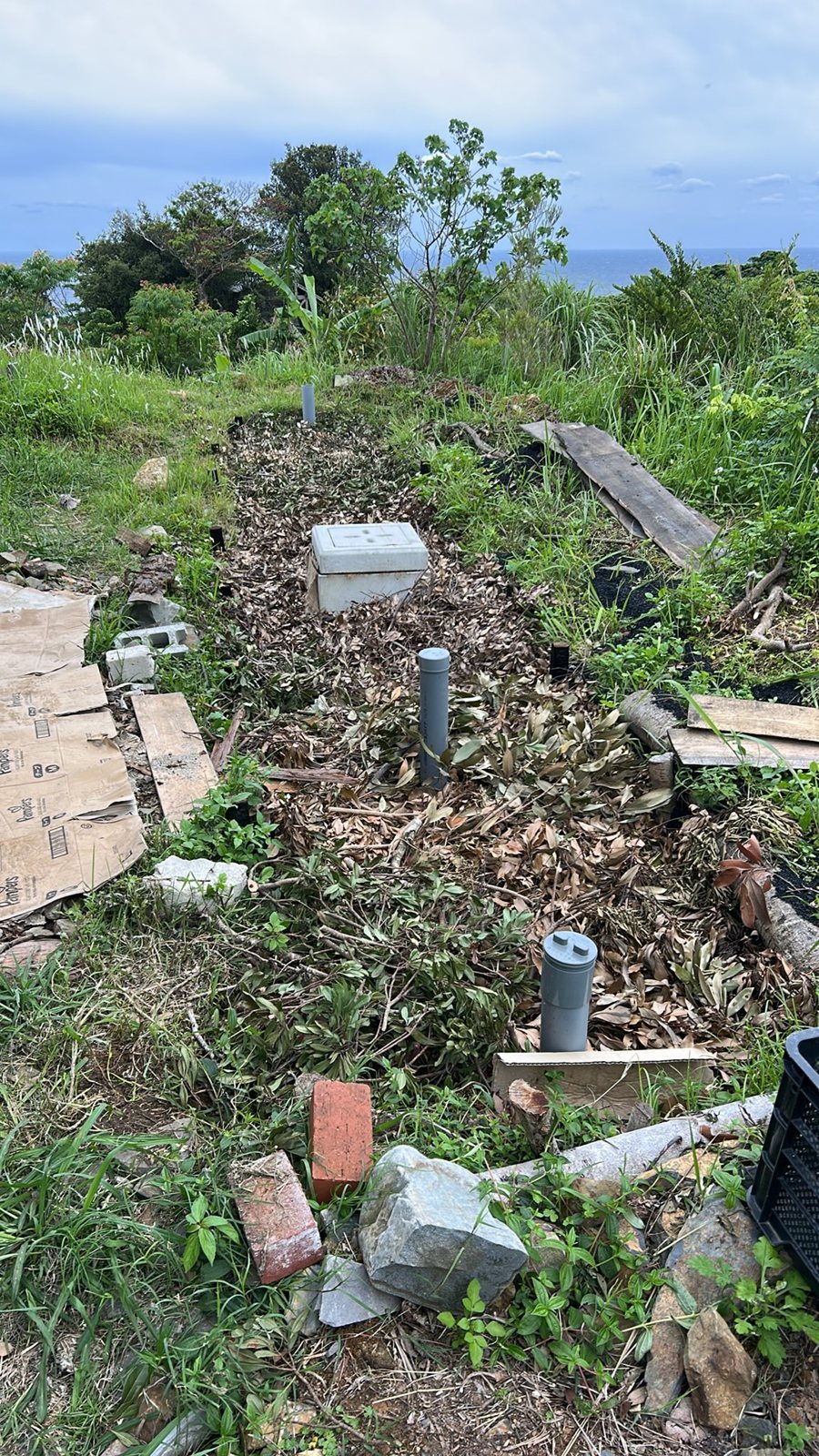
This is the most practical and valuable option. After a licensed combined septic tank treats the wastewater, the effluent passes through a planted channel bedded with gravel or crushed roof tile (often called a bio-geo filter), or a slow infiltration trench, before returning to the site.
Septic tank effluent still contains nitrogen and phosphorus. Results published by a Japanese public research institute report that a planted channel treating secondary effluent from a rural wastewater plant removed 0.90–1.30 g of total nitrogen and 0.22–0.25 g of total phosphorus per square meter per day (data from one regional trial; results vary). In other words, plants and soil take up what the tank cannot remove and turn it into greenery.
Where there is no watercourse to discharge into, some local governments publish guidelines for infiltrating septic effluent into the ground, typically requiring distribution boxes, trenches, water-level inspection ports and sampling points, plus regular checks. The charcoal, stone and aeration principles from our own build are most valuable here, downstream of a licensed tank.
Approach 2. Reduce the load at the source
- Install a grease trap and keep oil and food scraps out of the drain
- Wipe oily plates with paper or cloth before washing
- Measure detergent and choose products gentler on microbes
- Use water-saving taps and showers
- Compost food waste and return it to the garden
The lighter the load, the more stable the septic tank and the less strain on the plants and soil downstream. If you want composting toilets, public health centers vary in their stance, so discuss it early.
Approach 3. Make the water’s journey part of the guest experience
Showing guests where the water goes, from the tank through a planted channel that nourishes herbs and wetland plants into the greenery of the site, can become a meaningful experience: “this is where the water from this inn returns.” Keep treated-water channels out of reach of hands and feet with planting or fencing.
The Order of Checks Before You Build
- Confirm where wastewater can go when choosing land: sewer area, a watercourse for discharge, water source protection zones
- Consult authorities early: the public health center, the septic tank office and the building department
- Calculate tank capacity: from floor area and use, then estimate installation and maintenance costs
- Design the finishing stage: plan planted channels or infiltration trenches together with site water flow and planting
- Test soil permeability: dig a test hole, add water and watch how it drains
- Set up inspection and records: legal inspections for the tank, plus water level, odor and plant health downstream
If you build first and think about wastewater later, your options narrow sharply.
Following the Law and Living in Harmony with Nature Are Not in Conflict
Nature-minded people may resist the idea of a mechanical septic tank. But when you host guests, you are responsible for invisible pathogens and for groundwater and the sea. The tank is the foundation for meeting that responsibility.
How you return treated water to the land, and which plants and soils receive it, is up to your design. Build nature’s finishing layers on a reliable foundation. We believe this is the most dependable way to create lodgings and cafés in harmony with nature in Japan today.
Frequently Asked Questions
Q. Can a guesthouse or restaurant in Japan use only soil-based wastewater treatment?
Generally no. Facilities treating toilet waste outside public sewers must be septic tanks recognized under the Johkasou Act, and lodging and restaurant permit inspections check how wastewater is treated.
Q. How can a nature-based lodging design its wastewater system?
Treat wastewater in a licensed combined septic tank, then pass the effluent through a planted channel or infiltration trench so plants and soil take up remaining nutrients. Reduce the load at the source with a grease trap, water-saving fixtures and wiping oily dishes.
Q. How big a septic tank does a restaurant need in Japan?
Under JIS A 3302, a general restaurant is sized at 0.72 times its floor area in square meters, and a high-load restaurant at 2.94 times. A 100 m² general restaurant needs a 72-person tank, nearly ten times an inn without a banquet hall of the same size.
Conclusion
- Soil-based treatment alone is generally not enough to obtain lodging or restaurant permits for toilet wastewater in Japan
- Business wastewater differs sharply in volume, strength and variability; restaurants are sized at nearly ten times an inn of the same floor area
- Practical approaches: a licensed tank plus planted channels or infiltration trenches, source reduction, and sharing the water’s journey with guests
- Confirm wastewater outlets when choosing land and consult health, septic and building authorities early
Reading site water flow and designing soil and plant layers downstream of a septic tank is exactly what regenerative civil engineering and landscaping does well. The EKAM Online Course covers these principles in depth.